Article

By cavis , 25 December 2025
Source Description
Wichita Falls back robbery - 1896 (McCaleb)

Source Type

Description/Transcription

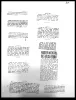
"The 1896 Bank Robbery", McCaleb, D. C., 1909. Wichita Daily Times, Wichita Falls, Texas, March 21, 1920
(C. Avis Catalog entry #1463)

[The following introduction was published in the Wichita Daily Times, March 21, 1920 and on file in the Lester Jones Collection, Wichita County Archives]

    There has never been a legal execution in Wichita county. This fact was remarked last week when the death penalty was asked against two men on trial for murder. Many recollected, however that years ago, there was a double hanging in Wichita Falls, which while it may have not been legal, nevertheless met with general approval on the port side of the public at that time. The hanging was that of Kid Lewis and Foster Crawford, who were hanged by a mob after they robbed the City National Bank and shot and killed Cashier Dorsey. 
    A number of years ago D.C. McCaleb one of Texas most talented writers visited Wichita Falls and wrote the story of the bank robbery, the capture of the robbers, and the hanging. Mr. McCaleb put the typewritten story in his desk and forgot about it. Recently, he moved to Wichita Falls in connection with his duties as director of publicity for the Wichita Motors Co. In cleaning out an old desk he ran across the manuscript of the story he wrote years ago. The Times has obtained permission to write it. Many whose names are mentioned have passed away. The story as printed here is a good one to file away.

-----------

The 1896 Bank Robbery 
Story by D.C. McCaleb, Fort Worth
Wichita Falls, June 1909

    Almost the last link that bound the hustling, wide awake, well sidewalked Wichita Falls of today with the free and easy, wild and wooly, and rambunctious Wichita Falls of yesteryear was removed this week. It was the telephone pole that stood on the corner of the City National Bank. It was this pole that Kid Lewis and Foster Crawford were hanged by an orderly mob on February 27, 1896. 
    For many years the telephone company occupied a portion of the 2nd floor of the bank building with a central exchange. The pole that did the service was a gib-bet which was the one which has all wires and cables fastened on leaving the central office. It was sound to the core, of considerable height and had about a pound or so of fine lead plugged in it near the top. Recently the business of the telephone company, like all other lines here, grew to such proportions that new and larger quarters had to be found. 
    With the moving of the exchange the necessity for the heavy pole was no longer obtained and as a result it was taken down last Tuesday. 
    Kid Lewis and Foster Crawford were two bold, badmen. Louis was as game an assassin as ever committed murder, but when the gaff struck home Crawford bellowed for calf rope -- didn't get it. He was a dunghill as compared with his partner in crime. 
    Lewis was a native of Missouri and he was christened Elmer when he was a chubby fisted youngster. He was 9 parts daredevil and one part cautious. After having gone to Montana where he managed to fracture all kinds of laws, Lewis finally came to Texas and before long found himself punching cattle on the Burk Burnett ranch near here. While working on the Burnett ranch, he met up with Foster Crawford, a McLennan County product, who became a cowpuncher though having indulged in a cutting scrape in his home county. Crawford was of a stab-in-the-back disposition and when full of liquor was terribly a terribly wordy man. 
    Riding the fence and occasionally assisting and getting away with a cow or a steer from Captain Burnett proved too slow for the men who wanted redder blood to work with, so the two planned to tap the City National Bank of this city, then as now one of the largest banks north of Fort Worth. It had become spread in some manner that this bank always had $200,000 to $500,000 in cash on hand, which was just about 4 times as much as it generally carried, and this was the rich prize that inspired the bandits. 
    The bank officials in some hazy sort of way got wind of the plan to rob the bank and secured a detachment of state rangers to guard the institution. A company, under the command of Captain Bill McDonald, the hero of the state revenue Department now, was stationed here for 10 full days. During this period everything was so quiet and bland that it was finally concluded that the would-be bank robbers had abandoned their plans and had called off their intentions. Whether that was so or not, it was known that after a stay of 10 days the ranger force pulled up stakes and started south. 
    Lewis and Crawford were argus-eyed. They were at the train station to shout adios to the departing rangers and the two felt slightly tickled to death when they saw the peace force leaving. 
    It was now for quick action. Hitching their two horses -- fabled to be the fleetest and possessed more staying powers and stamina than any two horses in the section--near the Saint James hotel, which was just behind the bank building, the two desperado started on their last lawbreaking mission. The day was February 25th in the year 1896 and the time was 2:30 o'clock in the afternoon. 
    Crawford entered the bank at the side entrance. He had liquor on his breath, a look of determination on his face, a big pistol in his right hand and murder in his heart. Lewis, similarly equipped, entered the building from the front door. Crawford made his way to the bookkeepers cage, where Lewis stepped up to the cashier's window, where cashier Frank Dorsey was talking to Dr. O. J. Kendall, who was a director of the bank. 
    The bookkeeper was P.P. Langford, now the cashier of the bank. He was adding up a column of figures at the time and was more or less intent on his work. Langford knew Crawford personally, but when Crawford spoke sharply to him to “Up, up!” Langford on looking up failed to recognize the man. As Langford made no move to throw his hands up , which he kindly explains he did not do because he did not understand he had been requested to do so by Crawford, the bandit took a hitch in the handle of his 6 shooter and whacked the bookkeeper, who today by the way has the most excellent set of dundreary whiskers, a perfectly resounding whack over the left eye with the gun. Langford dropped just like anyone else who receives the proper blow at the proper place would drop. In delivering the blow, however, Crawford either through nervousness or to inculcate the spirit of fear in the others in the bank, exploded his gun, the bullet entering the ceiling. 
    In the meantime Lewis had Dorsey and Dr. Kendall perfectly covered and he was suggesting in a preemptory manner that the cash should at once be shelled out. On hearing Crawford's gun go off however, it was quite evident that Lewis thought the time for gunplay had arrived. He promptly fired point blank at Frank Dorsey, who was a brother of Hugh B. Dorsey of Fort Worth, the bullet entering the right shoulder at the base of the neck, ranging downward and coming out at the left side, bringing a quick death. Crawford on seeing his partner open up with his gun, fired at Dr. Kendall. The bullet struck a hypodermic case which the doctor had in his pocket and glanced off without doing serious damage to anything except the case. Doctor Kendall realizing the game completely, keeled over when he was hit and remained almost breathless and entirely motionless for several minutes. It was this ‘possuming that saved his life. 
    In the meantime, Langford got his second wind. When Dorsey fell close to where Langford had fallen, Langford leaped forward, cleared the counter of the teller’s cage and bolted to the door. Some idea of a speed may be obtained when it is stated that Kid Lewis was a man powerfully quick with his shooting iron, yet Lewis was taking 3 shots at Langford while Langford was marathoning doorwayward, succeeding in landing only once when his final shot found it painful lodgment in the fleshy posterior of Mr. Langford’s anatomy just capping the hips. 
    Save for the silent Dr. Kendall and the assassinated cashier, the bank was now empty of all save the bandits. Crawford pulled a seamless sack from his bosom and swept some $460.10 into the sack. That was the exact amount of money on the teller’s counter. Crawford then tried to open the money drawer, but could only get “bells” and not having the time to jimmy it he abandoned the money till. He next made for the safe, but the burglar proof guarantee was working overtime and again the robber was foiled. All save $30 of the booty was recovered afterward. 
    But this time matters were becoming more or less tense and intense. The shooting attracted a fairly good sized crowd, many with guns, some with shotguns, all with all more or less correctly guessed knowledge of what was being done, but none had any burning desire to bell the buzzards. J.D. Avis tried to get a shooting iron but failed and he ran to the side door of the bank, where he met Lewis and Crawford coming out. Avis was full of all sorts of 18 karat spunk. Stepping right up to the bold, bad men in hopes of blocking their departure until someone could pluck them, he asked “What are you doing here, robbing the bank?” 
    The two thieves didn’t take a shot at Avis, but they snatched him aside and started at a track speed for their horses, which were hitched about thirty yards from the side door. The crowd in the meantime had become dense to the point of being almost suffocating, all observing the proper respect for an imaginary deadline, none of them crossing that imagined place. All sorts of weapons were on hand, but shooting room was at a premium. Being impossible to secure operating room for the handling of a shooting iron it was perfectly natural the robbers were not seriously molested as they mounted their animals. 
    No sooner, however, had the two men got in a stride the hurricane decks of their cayuses, when Will Hurst, managed to discount himself from the congested crowd. Hurst took good aim and banged away at the fleeing men. He didn't hit a robber, but he winged a horse, and this forced the 2 men to mount one animal and unquestionably was responsible for the tall pole removed last Tuesday having a real history. The two men on one horse made their way across the railroad track to the Holliday Creek bridge. 
    Now comes the hero upon the scene. Will Skeen, who was the editor of the Wichita Times, sitting at his desk chewing at the end of his lead pencil chasing the idea to encompass it into an editorial on the “Peaceful Wichita Valley”, when he heard the first shots fired. He had just written the headline for the editorial and was having a hard time composing thoughts to fit the idea. The ringing gunshots were like in the elixir to his fagged brain. All thoughts of “The Peaceful Wichita Valley” went glimmering, and kept going, in a fraction of a second. Skeen felt like he was in his own element and the war horse stride was the gait of his feet. 
    Skeen then hesitated for a second. All that he was certain of was that the enervating peace had been disturbed. Whether it had been disturbed by some friendly visitors being engaged in the harmless joust of shooting up the town, or whether there was a fire, which in itself was a matter of more or less passing importance, or whether two reputable citizens were settling an argument outside the pale of the law, Skeen didn’t know. All that he knew was that his nostrils whiffed some excitement, and it sent his blood tingling in unison to the excitement, when at whatever it happened to be. He finally concluded the shooting was caused by fire being in the city, and just to keep his seat on the bandwagon Skeen poked the nose of his ten pound six shooter out the window and turning loose six shots as he caused the heavens to reverberate with the ear splitting sound. 
    Just then Ed Cannon, who worked for the City National Bank, came running by. Cannon was breathless and well tired by the his very rapid getaway work. When Canon heard the report of Skeen’s pistol, strange thought took possession of his mind, and fatigue and tiredness vanished from his person. At the site of Skeen, however, was reassuring. 
    “Where is the fire?” Skeen asked him when he got Cannon’s attention. When Cannon got his breath, he painted the truth to the editor-hero. Skeen threw off 20 years from his shoulders and decided at once he wanted to get some of the excitement. Wise general, that he was, he first bolted into a gun store, which was between him and the place of the shooting and commandeered his pockets full of cartridges. Then Skeen started like wildfire for whence came the sounds of the scrape. 
    On his way to the place Skeen met “Mother” Young who told him that the robbers had started for Holliday Creek , Holliday Creek is now Lake Wichita, having been dammed from a creek to a real lake that the men were evidently anxious to make hay while the sun was in the heavens. About this time Sid Pitzer came riding by on his fleet steed, which was reputed to be the fastest animal in the whole section. 
    There were two opportunities met and neither had to knock at the door of the other. Skeen the editor hero was itching to follow the robbers. Pitzer had a horse that can follow them. Pitzer dismounts with alacrity and Skeen gets in the saddle with one jump. Now comes a second aid to our hero. T.B. Noble springs into sight bearing a heavy Winchester Express rifle, jam full of cartridges, warranted not to jam in fleeing the exploded shells, and also several rounds of extra ammunition. Skeen already had a fleet horse. His manhunting outfit would be complete with the heavy Winchester. He got it and thus the hero starts out after the two villains. Had it not been for Pitzer and Noble perhaps the able editor of the Wichita Times would never have had the halo of a hero about his head, and to these two gentlemen Skeen owes a great deal. 
    Skeen now dug his spurless heels into the sides of his thoroughbred, borrowed for the chase. He was going like the winds, when J.D. Davis, the city Marshall, mounted on a go-some horse himself, join the intrepid editorial writer and job press jiggerer. 
    The robbers first held up Will Neal, a vegetable peddler, and took his horse from him. And at the same time taking ten years growth from Neal, which was a perfectly natural. On went the robbers. Coming fast were the men after them. But 300 yards separated the pursued from the pursuers and the robbers crossed the bridge over Holliday Creek. The bandits turned their course down a lane across what was called Onion Flats. One of them bolted from his horse to let down a gap, then bang! Skeen fires the first shot at the man. That man was Kid Lewis, who merely waved his hat at the editor hero, as he mounted his horse started like the wind to make his getaway. 
    The steeds were apparently evenly matched, for the robbers could not leave the two men after them and the horses of the posse of two could not get closer than 250 yards of the bandits. In this alignment the chase continued for about 5 miles south by east, the robbers trying to make for the wild and wooly Indian Territory section across the river by a “throw off” route. Suddenly the robbers cut from the lane and made for a crossing on the river at the Knott farm. In the meantime, the horses of our editor Skeen and his co- hero Davis were pretty well spent. They were good horses for track work of perhaps a mile. But a five mile race was too much for an oat training. So the two posse men meeting a German farmer negotiated a swap of horses without telling the reason why or volunteering anything assuring, and again took up the chase. The German farmer spoke strongly in a strange tongue at the two posse men. When the robbers saw that they were about to be foiled they turned the noses of their horses towards river and forced the animals to jump about a 15 foot embankment. As the men near the other side, Skeen and his co-hero reached this steep embankment. 
    “Take that you villains!” hissed Skeen as he sent a leaden message from his borrowed Winchester singing after the bandits. The two robbers hurled back curses at the men they could not throw off of their trail. Try as they could the editor-hero Skeen his co-hero Davis could not make the heavyset horses they had gotten from the German farmer take the embankment, so they had to hunt for a ford. In the meantime, the animals written by Lewis and Crawford were blowing hard and were lagging in the limbs. The thieves seeing a Bohemian farmer, who scarcely spoke English, working a team of nice horses in a field to a plow, they engineered a swap with more force and quicker effect than with that politeness and the subtle nicety usually incidental to horse trades. 
    It was this swap that finally assisted in making the telephone pole removed Tuesday a pole with a history. The two horses had been plowing all day and were well tired and as a result got quickly winded when made to breakneck speed it across a freshly plowed field. When the thieves reached the Charlie Road, on Hammers place, the plow ponies were fit for panting and we're doing that bully fine, but as race horses they were arrant failures. And they had been entered into a Race for Life too! 
    Then Skeen, our editor-hero, threw his eyes on the robbers again, for he and Davis had gotten across the river and were once again on the trail of the assassins by this time. Again did Skeen try his aim at the bandits, but his aim was not as good as his intentions were sincere, so the third try failed to win the game. 
    Pretty soon Skeen, our editor-hero, and Davis were joined by George See, prescription clerk at S.D. Lynch’s drug store. The trio followed the two robbers down the road for about 3 miles, always permitting the intervening space to be of a significant distance not but not test the bad shooting qualities of the Winchester, or the good shooting qualities of the pistols belonging to the robbers, when the bandits turned into what is now the Thornberry pasture. Here the robbers made for a thicket, about a mile distant, when they dismounted taking their bridles, six shooters and money, they started into a not exactly leisurely gait, down a creek. About this time people were coming from everywhere, and our editor-hero, his co-hero the city Marshall and the pill and prescription clerk of the Lynch drug store, merged their honors and glory with that of the great crowd. The thicket was surrounded, and a guard was established. Still no one apparently cared to bell the buzzards. 
    In the meantime, Captain Bill McDonald, then the terrorless captain of a ranger band, had been reached by telegraph at Bellevue and he caught the next northbound train, which was starting right away for Wichita Falls. Had Captain McDonald not gotten this telegraph he never would have had that thrilling chapter of the way he captured the two bank robbers in his autobiography written by hired writer. Captain McDonald reached the scene after the bandits had been thicketed. 
    The robbers in some manner eluded the human trocha and they were making their way to some horses peacefully browsing some distance from the creek and the thicket. They were discovered by Henry McCauley, who promptly gave the alarm. The posse surrounded them, at a safe distance, and herded them into the thicket. After a parley the two men agreed to surrender to Captain McDonald, who at that time was eating a supper, consisting in part of fried chicken, at the home of a Mr. Barger, which was just a mile away from where the robbers were, if Captain McDonald would guarantee them safe delivery to the Wichita Falls jail. 
    McDonald was sent for and he agreed to do this. He arrived and commanded the robbers to “hold up your hands and hold him damn high!” In accordance with the agreement that they had made with the posse, they obeyed Captain McDonald, whom after handcuffing them loaded them into a wagon and drove at a rushed jolting speed to town. On the way to town it was reported that the two robbers swore in a manner that would have done justice to the mate of a Mississippi River Steamboat or a government contractor working with negroes in Arkansas. 
    Captain McDonald who sort of suspected there would be a need for a kind of pole if the citizens had their free hand, kept his squad at the jail for a day and a night. And on February 27th he boarded a train and then law of the early days in the section asserted its originality and recognition. 
    Hardly had Captain Bill and his brave band left Wichita Falls when little knots of men merged together here, there and at this place and that, the crowd soon numbered a goodly number, but as yet leaderless. A leader is always on hand when a leader is required. At this particular day he appeared and rose smiling to his job at the psychological moment. By this time the shades of evening were being drawn in all the earth around Wichita Falls was soon draped in the ebony mantle of night. It was in the air that there would be something out of the ordinary doing before long and it was generally accepted that it might be well done. Some thoughtful person knowing full well that perhaps many of the present would never again get the view such a sight, started a bonfire near the building of the City National Bank. 
    After the bonfire got to blazing brightly, shedding its light for blocks and more, the crowd concluded it was time to be up and doing the business at hand. It went in a quiet light, orderly manner to the jail and there politely requested Frank Hardesty, a deputy Sheriff, to present the removal of the two bandits from the jail so they could be hanged in a decent sort of way. Hardesty came near biting the dust first when the bandits made their getaway after killing Dorsey. He was then in the first crowd after the two men, and he was had been fired upon by Louis. The bullet struck, Louis' bullets generally landed well, a watch in the pocket of Hardesty, putting the watch out of business, but not permanently injuring the deputy Sheriff. 
    Mr. Hardesty was just as polite as the genteel mob leaders. He admonished them to consider what they had contemplated seriously, and he urged them to disband and return to their homes, assuring them that the outraged law should be permitted to take its certain course. 
    While this polite society parley was being engaged in front of the jail a more forceful method of securing the two murderers was being practiced at the end of the jail, a rather frail structure by then when tackled by energetic people. With a telephone pole as a battering ram the rear door of the jail was quickly jarred into a wide aperture. The jailer was found and upon proper credentials being presented by the leaders he turned over the cell keys to the avengers of Dorsey’s death. The two men wanted were quickly secured, were almost as quickly bound so they couldn't do any material harm; ropes were fastened around their necks and a procession was started. It was the first time that circus methods were ever employed in conducting an orderly lynching. It was explained that the procession was given to permit people to see the two right men who had done wrong and would end up right, were had. With the two assassins in the center, they procession preceded from the jail down Six Street to Indiana Avenue, thence to the corner of 7th and Ohio, where was and is still located the City National Bank and where on last Tuesday was removed that tall telephone pole, on which that eventful night served successfully as a gibbet. 
    Here the two men were mounted on boxes, so all could get a good view. Ropes were placed around their necks - their hands were already tied behind their backs - and then and they were made the target for more or less pointed remarks from members of the orderly crowd bent on speeding justice. 
    With all this, a lot of mercies was shown on the two murderers. They were supplied with an abundance of whiskey. Lewis drank sparingly. He was never talkative. Crawford finally became loquacious and alternately showed bravado and cowardness. Captain Burk Burnett, now of Fort Worth, who then owned a big ranch near here and then had several 100,000 acres of Comanche Kiowa land, just back across the Red River, was in town that night and as he was losing a large number of cattle at frequent intervals. He asked permission to speak with the two men before they were swung up. They had both worked on his ranch and he wanted to secure information that would enable him to break up the cow stealing habits, where his cattle had been involved if possible. He first went to Louis, who very politely almost eloquently, told him to go to a hotter place than Texas in reply to the question from Captain Burk. Then Captain Burnett approached Crawford who by this time was almost mellow and was rapidly nearing the drunk and disorderly stage, to drop into the vernacular of a city police court, with good liquor. Crawford, instead of replying to Captain Burnett's question, drew back his foot to kick the cattlemen. Captain Burnett started to kill the man, then and there, but was dissuaded by a gentleman who is now a prominent railroad official in Fort Worth. 
    After keeping the two men on exhibition for about 10 or 15 minutes Lewis the “Kid”, was game to the core and never flinched, haven't shown the slightest whiteness nor asked for any favor or mercy, was drawn quietly up. He died without a flicker. His body hung like so much lead until life was extinct. The only movement was a swirling one. No one to this day, knows when life left his frame. 
    Crawford, who was almost hilarious and whose condition makes it impossible to know whether or not it was the man or the liquor he had absorbed that was acting, was pulled skyward. He went up on the end of the rope with a curse and a prayer on his lips. He died hard -- awfully hard. He tried frantically to fight against the inevitable and his death writhings caused the mob to melt away like snow before a tropical sun. He was fully 10 minutes in quieting down and looked at one time like he would never give up the ghost. His passing was at the end of the chapter. 
    After the men had passed in their chips and a fearful warning had been posted that the desperate treatment would be accorded to dastardly men who attempted to use Wichita Falls is stamping ground, some of the crowd shot at the top part of the pole, just above the hanging, swinging corpses, and it was the bullets from these final gunshots -- those parting sounds -- that imbedded into the old pole. Neither of the bank bandits were shot neither before nor after the hanging. 
    But that was all long ago and is far away. Wichita Falls today bears the slightest resemblance to the Wichita Falls of 1896. While it is true that peace cannot be said to prevail here, the disturbances here today are the noises of commerce. During the present calendar year over 750 feet of business brick buildings have been started or completed. During the last year over 40 miles of concrete sidewalks have been laid here. Last year 242 residences were erected here, in addition to 33 business houses. The citizens also built a $40,000 Opera House and it is a little gym. A new City Hall, costing $20,000 in which, wonder of wonders is it an architectural beauty, has been just completed. A new five story and basement hotel is nearing completion. Bonds have been voted to pave all the city streets all the business streets in the city. Bonds have been voted for $60,000 new high school here. Natural gas is sold here for 9 and a half cents per 1000 feet for factories and 30 cents per 1000 feet for domestic purposes. The Kemp - Kell syndicate is now building a magnificent pagoda at Lake Wichita and an electric car line covering the entire city and running through the Lake will be in operation by July 15th. The steel has nearly all been laid. Wichita Falls has 7 railroads. It was the greenest crops have any section in the state. It has irrigation for thousands and 10s of thousands of acres. And it will soon have a new line to Mangum OK, which will open a vast tour territory to the trade of this city and it has hustle, push and more vim galore. It has subscribed more money to the commercial club than any other town in the world, population considered and is headed at a rapid gait to a glorious destiny of a big -- a great big city. What changes the years will bring? The old telephone pole was the last link between the old and the new. It is gone - gone forever, just like the old wild and wooly days have gone and gone forever. The man with a hoe has taken possession of the surrounding country. The man was civic pride and with energy and hustle and do something, is at the helm the city proper. Peace reigns and prosperity is perpetual, for the farmers around here are not dependent upon the rains but a upon the irrigation for their crops.

D.C.M
 

By cavis , 25 December 2025
Source Description
Wichita Falls bank robbery - 1896

Source Type

Description/Transcription

Wichita County Beginnings (Kelly, Louise, 1982)
(C. Avis Catalog entry #459)

For other assorted references to the Avis family see Transcript

p. 43, 44, 45  

CITY NATIONAL BANK ROBBERY
February 25, 1896

The robbing of the City National Bank and the capture and hanging of the robbers has been told many times by many people, some who knew bits of it, some by hearsay. John Gould, columnist on the Times for many years, researched and wrote the most accurate account, publishing it in the paper in four parts in 1951. However, I feel that Gould relies too much on the autobiography of Bill McDonald, who, after all, was not present during the real action (nor was W.J.L. Sullivan) and, as Gould says, neither gave himself the worst of any situation. I have used individual interviews and memoirs of people who participated, or who had good reason to know, and some additional records. Some things cannot be resolved: who fired the first shot and which one shot which bank member (except for Dorsey). Several people claimed to have shot one of the escapees’ horses. Hardesty seems to be the one since he without question received the returned shot.  No one really knows what the men said at the lynching —no one put it on record.

Rumors of a robbery had been current for some time. Because northwest Texas had a poor record of law enforcement and was so near the Indian Territory, a hideout for the lawless, Mr. Kemp was able to persuade Governor Culberson to send five Rangers to protect the bank. It was a dull duty and they left.

On the morning of February 25, 1896, Mrs. J.A. Kemp called Frank Dorsey for coffee and told him that Clabe Burnett had called with more definite information. (Mr. Kemp was out of town.) This information Dorsey relayed to Wiley Robertson before Robertson left the bank to help at Kemp’s store. Dorsey said that he feared for his life.

The City National Bank was in a three-story brick building on the southeast corner of Seventh and Ohio, across an alley from the St. James Hotel and with two outside entrances, one at the rear of the bank on Seventh and the other at the corner on Ohio. In the bank around two-thirty, when the robbers entered, were only four men: Frank Dorsey, cashier; Dr. O.J. Kendall, vice president and a director, who was reporting to Dorsey on some ranch land he had checked for the bank; P. P. Langford, bookkeeper; and John L. Nickles, the only one not hurt. Friends said he was so thin that he took refuge in an ink bottle. The president, J. A. Kemp, was on a trip with the Katy railroad president; Wiley Robertson, assistant cashier, was on his way to the bank with $400 from Mr. Kemp’s store; S. E. Can- non, bank runner, was at the courthouse on an errand. There were no customers. — Chief source: [Memoirs and interviews with Mrs. Kemp and Robertson.]

There is a divergence of opinions as to which robber shot first. There is no question but that Lewis shot Dorsey at close range when Dorsey reached for his gun below the cash drawer. Dorsey fell to the floor with his unfired gun, shot through the shoulder and head. Lewis aimed for Kendall’s heart but hit his pocket in which he was carrying his hypodermic case; he was stunned and fell to the floor feigning death. P. P. Lang- ford, slow to raise his hands, was hit on the head with a gun. When he crawled to the back door, he was shot in the fleshy rear but got to the street and gave the alarm.

The bank vault was not locked, but the latch gave trouble and the robbers abandoned it, scooping up the contents of the cash drawer (about $410) into a paper sack but overlooking the next drawer which contained about $1,000.

As the robbers dashed out the back door of the bank, they pushed aside unarmed J. D. Avis and went into the alley by the St. James Hotel where their stolen horses were waiting. As they passed the vacant lot next to the bank, Frank Hardesty, deputy sheriff, fired, severely wounding Lewis’ horse. Crawford fired back but the bullet became embedded in Hardesty’s watch. The two robbers rode double to Eighth Street and east to Holliday Creek. Twice during their ride to the Thornberry area they changed horses. The first time horses were taken from William Neal, a truck farmer who was driving with his wife to Wichita Falls. Fred Crane, a railroad man, witnessed this exchange. Then the two worn-out horses were exchanged for some farm animals. J. F. Keller had a high-powered rifle, but people on the street were in the way and he got no shot off.

The story of the pursuit by about a hundred men on horseback and afoot is confused, largely because the men were confused and Sheriff C. M. Moses was out of town. Then, of course, each one wanted to show himself in a good light. Will Skeen was in the office of the Wichita Weekly Times working on an editorial, ““The Peaceful Wichita Valley,” when he heard the commotion. He thought it was a fire and sent six pistol shots from his upstairs window, hurried down, talked to Ed Cannon, and dashed into a gun store for cartridges. “Mother” Young told him the directions the robbers had taken; Sid Pitzer let him have his horse, the fleetest steed in Wichita Falls; and T. B. Noble contributed a Winchester rifle and rounds of ammunition. Though he fired several times, he missed. Mage Davis followed close behind until they reached the Thornberry thicket when the crowd caught up and surrounded the place where the robbers had taken refuge. It was dusk but later a full moon came up and the crowd feared to go in. The robbers refused to surrender to the crowd but said they would surrender to the Rangers.

The Rangers had left on the noon train for Fort Worth, but a Western Union dispatch caught them at Bellevue and they returned by a special car attached to an engine, arriving around five o'clock. Soule had horses waiting for them. They were having a chicken supper at Barger’s, a mile away. When they arrived the full moon helped the Rangers spot the robbers and their horses and McDonald took them and the money with no trouble.

After being fed at the Mart Boger Ranch (Clay County) the robbers were put in a wagon in chains and covered with quilts. John Hester, foreman of a Clay County ranch, drove the wagon with deputized Tony Thornberry beside him. Two other men rode in the rear of the wagon. They reached the jail about two o’clock a.m. and the robbers were placed in the women’s part of the jail as Mrs. Hardesty only had the keys to that part of the cells. Hardesty and the posse had not re- turned. The Rangers slept in the jail that night but left on the early afternoon train. Some say they sensed a possible lynching. The robbers gave Hardesty their watches, one a lady’s, the other one stolen. Many people visited the jail to see the robbers. J. R. Bachman, then a schoolboy, said practically all the school children and teachers visited.

Mob spirit built gradually during the day of the 26th, especially as the funeral of Dorsey brought out practically the entire population. Small groups met in offices to discuss lynching. Hardesty moved his wife and children from the jail to the house of a friend. District Judge George R. Miller pled for moderation; Judge Huff spoke to the gathering group about having murder on their consciences for the rest of their lives. Hardesty said he was ready to defend the prisoners in the jail. The crowd, summoned by the fire bell, listened respectfully and was remarkably orderly but deter- mined; none was masked or disguised. For light, a bon- fire was built at Seventh and Ohio. Stories vary as to how the prisoners were taken from the jail, but all agree that the door was battered down and that Hardesty gave only token resistance. Awaiting them was a rope thrown over an arm of the pole at the corner entrance to the bank, with some boxes beneath. Crawford snarled; he asked for Burke Burnett, for whiskey, offered to lead them to hidden money, and then collapsed. At a prearranged signal, someone gave a pull on the rope and kicked the boxes out. The crowd was gone in an hour.

Before dawn Tom Pickett and Nat Henderson (his story) cut the hanged men down and took the bodies to the undertaker’s (J. Seelinger) porch at Ninth and Scott. The father of Lewis wired authority for a casket, but later refused to pay for it. Lewis was buried in the casket, Crawford in the box the casket came in, and both were buried in the same grave in the pauper section of Riverside Cemetery. There have been three different markers, the first of wood and the latest placed in 1958. Mrs. Dean Howard for years put flowers on the grave, the person doing so being unknown until after her death. One loop of the noose was given to Seth Mayfield, who sent it to Mrs. A. H. Carrigan for the local museum. She promptly gave it to Lester Jones in January, 1935. The pole stayed on the corner until it was taken down in late June, 1909.

The two robbers were well known in the area as restless cowboys who worked for Burke Burnett. Crawford, as early as 1888, and ‘‘Kid’’ Lewis only a year after, caused trouble in Wichita Falls. Both wore boots from Clapp of Wichita Falls. Foster Crawford was thirty-five, and from a good family in McLennan County. His mother and two sisters came later to see his grave. He had a few likable qualities and he liked expensive clothes, boots, and gear. He was a good worker but often got drunk and fought anyone handy. Will Taylor recalled that he was once ‘‘laid out by John Foster, a dairyman.’’ He died hard, cursing.

Elmer ‘‘Kid’’ Lewis, the other robber, was an eighteen-year-old kid from Neosho, Missouri, out for excitement and fleeing from trouble in Montana. He hatched trouble and followed easily. Lewis had been in the county about a year, and was hanged first, jeering at the crowd.

Of the $2,000 reward offered by the two banks, $800 went to the Rangers; the rest went to the posse members, most of whom gave their portion to Mrs. Dorsey, who bought a home on the Charlie Road. At the insistence of Judge George Miller the grand jury met in April, 1896, and indicted five more men for murder (lynching), no-billed four or five, including Hardesty, and heard twenty-six witnesses. When the five came up for a preliminary hearing, Judge Miller was told his wife had been in an accident in Graham. While he was away, the lawyers selected a temporary judge, C. M. Sherrod, and had four of the cases transferred to Wilbarger County and one to Cooke County. No record has been found of any trial being held.

Members of the grand jury were J.C. Hunt (foreman), F.M. Avis, S.M. Butcher, A. A. Honaker, W.C. Heath, F.D. Kildow, R.O.C. Lynch, John Meyers, E.A. McCleskey, D.M. Smith, Andrew Weeth, and T. P. Roberts.

Bailiffs were I. Knight, J. F. White, R.T. Pickett, and A.C. Bragg.

Other Sources: 

- In this Western Country, a series published in the Times in March, April, and August 1950.

- O.E. Cannon, Record News, March 21, 1944, various Times clips.

- Memoirs and interviews: Wiley Robertson, Mrs. J.A. Kemp, T.T. Reese, Nat Henderson, Jerome Stone, and many others who were here in 1896.

C.M. Sherrod was the justice of the peace who held inquests on all three.


By cavis , 12 November 2025
Source Description
L. S. Mooring warns against accepting certain notes - 1844

Source Type

Description/Transcription

Telegraph and Texas Register, Houston, Texas, 4/3/1844, p. 3, column 2
(C. Avis Catalog entry #131)


Moore, Francis, Jr. Telegraph and Texas Register (Houston, Tex.), Vol. 9, No. 16, Ed. 1, Wednesday, April 3, 1844, newspaper, April 3, 1844; Houston, Texas. (https://texashistory.unt.edu/ark:/67531/metapth78044/m1/3/: accessed November 12, 2025), University of North Texas Libraries, The Portal to Texas History, https://texashistory.unt.edu; crediting The Dolph Briscoe Center for American History.


NOTICE
Is hereby given to all persons not to trade for two notes made by the subscriber, payable to Samuel McGuffin, one for two hundred and fifty dollars, payable the twenty-fifth of December, 1844; the other for two hundred dollars, payable the twenty-fifth of December, 1845, as they will not be paid until he complies with the considerations for which they were given.

L. S. MOORING.
 

By cavis , 12 November 2025
Source Description
Arche Hodge announces administration of estate of James Hodge - 1844

Source Type

Description/Transcription

Telegraph and Texas Register, Houston, Texas, 4/3/1844, p. 3
(C. Avis Catalog entry #1460)

Moore, Francis, Jr. Telegraph and Texas Register (Houston, Tex.), Vol. 9, No. 16, Ed. 1, Wednesday, April 3, 1844, p. 3, column 3; Houston, Texas. (https://texashistory.unt.edu/ark:/67531/metapth78044/m1/3/: accessed November 12, 2025), University of North Texas Libraries, The Portal to Texas History, https://texashistory.unt.edu; crediting The Dolph Briscoe Center for American History.


NOTICE. 
The undersigned having received letters of administration, on the estate of James Hodge, deceased, notice is hereby given to all persons having claims against said estate, to present them duly authenticated and within the time prescribed by law, or they will be barred and those indebted to the estate to make immediate payment.

ARCHE HODGE, Administrator. Fort Bend, March 25th. 1844. 


By cavis , 1 November 2025
Source Description
Prospects for the town of Avis - 1916

Source Type

Description/Transcription

Wichita Daily Times, Wichita Falls, Texas, 3/12/1916
(C. Avis Catalog entry #1459)


WICHITA DAILY TIMES, WICHITA FALLS, TEXAS

Page Four
Sunday, March 12, 1916  -  Part Two

REFINERY MAKES NEW TOWN, AVIS

JACK COUNTY VILLAGE NAMED
FOR WICHITAN AT HEAD OF PLANT

SINKING DEEP TEST

Considerable Shallow Development Also Under Way on Jack County Tracts


    Since the Avis refinery has begun operations in Jack county, the town of Avis, given that name in honor of J. D. Avis of this city head of the refining company, has begun to make a noise and promises to become the most important center in Jack county. The Jacksboro News published at Jacksboro now contains a special department given over to news from the new town. The following items are reprinted from a recent issue of the Jacksboro paper 
    Avis, the rag house village, in the heart of the Jacksboro oil fields, has been lying dormant long enough, and as the time of the your for the grass to rise has come, a new inspiration has been imbibed and we feel, although we are, to a certain extent, isolated from the rest of the world, we deserve recognition, at least by our nearest railroad city. We are, however, extremely fortunate to have water service to Jacksboro and by this means we are enabled to keep in touch with the proceedings of this peace spirited nation of ours. 
    Avis within itself in a unique character for it is the only place in the world today that operates the Wells Process of refining oil. However, we can not, within a few months' time, boast of this distinction, for the Wells Process is becoming widely known and, in fact, is being installed in several other places.
    It is the general opinion of strangers when they come in sight of Avis, that they will see a field of gushing wells and that the Avis Refining Company is operating the same. This is also a mistaken idea for the Avis Refining Company is a refiner and not a producer.  We like to have you visit Avis and the refinery, and take special interest in showing and explaining things of general interest. 
    While the refinery is at present securing its crude oil from another source it is expected in the near future that production in this field will be sufficient to meet the needs of the refinery.  A deep test is now being sunk here and other wells are to be started soon. There is considerable shallow development in progress and the near future promises to see a great increase in activity. The great refinery acknowledged to be the most complete plant in the southwest giving employment to a number of men, the increasing activity in the oil field in this section is bringing more men here and the town of Avis promises to become one of the most important oil centers in Texas. 
    Avis can also boast of one of the newest and most up to date school houses to be found in any Inland town. This brick building is Indeed a credit to Avis and to any village of twice its size.  Electric lights are now being installed and when completed, will make a decided improvement over the antique method of oil lighting.
    Ben Briswold who at this place represents the Capitol Oil & Gas Co., of Fort Worth, left Sunday for the Petrolia oll fields.  He is to meet J. H. Sanderson, president of the company in Wichita Falls and from there they will go to Petrolia and to locate a place for another oil well.
    S. S. Pugh, representative of the Pre-Historic Oil Co., has gone on an extended business trip to Louisiana and will visit his family in Oklahoma before returning.
    D. P. McConnaughey, secretary of the Wells Process Co., and who is now at this place attending to the business interests of the refinery left Sunday for Dallas. He expects to be gone about two weeks.


By cavis , 25 October 2025
Source Description
History of the Avis community and school

Source Type

Description/Transcription

The History of Jack County, Texas
(C. Avis Catalog entry #1457)


p. 144-5

AVIS          C109

Avis School

The Avis School was in existence from 1915 to 1980. Built by the Avis-Wood Oil and Refining Company workers and originally intended for the benefit of their children, very few refinery families were still around after 1918.     

The Avis Community and Avis School took their names from James David Avis of Wichita Falls, the originator and President of the Avis-Wood Oi)l and Refining Company. 

William T. Wood, co-owner and Vice-President of the refinery donated land for the erection of a school building, June 28, 1915. The school was built and ready for classes in the fall of that year. It was in District 66 and designated as a grade school, with grades one through seven. 

The school building was exceptionally nice for a one-room country school. It had concrete floors, front porch and front steps. The exterior was brick and it has a tar roof. Each year, the men of the community would gather, heat asphalt and pour it on the roof to keep it from leaking, smearing it on with push brooms.

It served as a Community Center as well as school. On Sundays, it was Church and Sunday School and sometimes, Gospel Singings. There were pie suppers, box suppers, ice cream socials, Easter-egg hunts, Christmas get-togethers, school board meetings, etc., but the best of all were the "Literaries," or play nights. The programs were made up of whoever in the community could recite a poem, sing a song, dance a jig - or whatever - along with the well-rehearsed school children. And their programs, on occasion, included a skit of some kind. These Literaries were presented to "Standing Room Only" audiences, as people came from other communities such as Pudden Valley and Burton Springs to enjoy the entertainment. The big double doors in the back of the building would be thrown wide open and those who couldn't get in stood outside, craned their necks, and looked in. These activities prevail- ed from the start of classes in 1915 and continued on until 1930. 

On July 12, 1930, the Avis School was consolidated with the Post Oak School District, after which time Avis children rode a school bus into Post Oak. The last school year for Avis School was in the fall of 1930 and spring of 1931. 

In the 15 years of classes in the Avis School, only ten teachers taught there: (1) Esther Sanders, 1915-16 and 1916-1917; (2) Grace Lamar, 1917-18; (3) Mary Hilton, 1918-19; (4) Eugenia Johnson, 1919-20; (5) Georgia Lelach, 1920-21 and 1921-22; (6) Nell Morris Pults, 1922-23 and 1923-24; (7) Eva fell Teague, 1924-26; (8) Camile Bird, 1925~26 and 1926-27; (9) Lula Williams Ellis, 1927~28 and (10) Opal Smith, 1928-29, 1929-30 and 1930-31. 

List of pupils, and there may have been others: Lillie, David and Alfred Brisco; Louise, Helen and Oleta Campsey; Flora and Maudie Catlin; Bertha and Eugene Echelbarger; Clifford Edmiston; Burleson and Bluford Finch; Virgil, Elma, Oleta and LaRue Finch; Alton Franklin; Earlene, Hazel and Thurman Graves; LeRoy Grimmett; Arvil and Bill Kennedy; Lula and Katherine Lindsey; Lois and Jim McAnear; Buddy McAnear; Roy Moody; LeRoy and Loy Nichols; Ruby Nipper; Roy and Vanda Pierce; Ida Mae Reeves; Pauline and Christell Reeves; 8918

J.T., Warren and Junior Rummage, Melvin, Zella and Alvin Rummage; Lester E. Smith, Flay Dell Stevens; Dovey Taylor; Ethel, Lizzie, Verdie, Stella, Eddie and Doyle Walton; Evelyn Wasson and Fay Woods.

For information on teachers at the Avis School look in the Family History Section for Esther Sanders, Grace Lairner Foxhall, Mary Hilton Whiteside, Eugenia Johnson Duncan, Georgia Leach Bryant, Nell Morris Pulte, Eva fell Teague Taylor, Camille Bird Bearden Russell, Lula Williams Ellis and Opal Smith Bell. 

Avis-Wood Oil and Refining Company

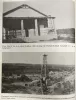
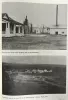
Had there been an abundant supply of oil reserves in the Stinehouse pool, there might have been a thriving town located ten miles north of Jacksboro by the name of Avis. The townsite was already staked off, streets named and the Master Plan called for a luxury hotel to be built on top of Dead Man Mountain.

Had all the high hopes and bright dreams materialized for those who had the ambition and courage to build a $150,000 refinery near the Stinehouse wells - the first oil found in Jack County - the world might have beaten a path to their door. Unfortunately, it was not to be. The refinery operated for only three years.

The decision to build a refinery near the Stinehouse wells was made on the strength of the high grade oil found there. The Avis-Wood Oil and Refining Company was incorporated July 15, 1914, with J.D. Avis of Wichita Falls, Texas, President and W.T. Wood of Kansas City, Missouri, Vice-President. Frank E. Wells of Columbus, Ohio, who patented the "Process of Refining, Fractionating and Reducing Oils," was architect and Superintendent of the refinery while it was under construction. He drove a fancy Hupmobile, and was the first tenant in the office building.

My dad, Jesse F. Finch, was hired as a roustabout in August, 1914. He pumped the Stinehouse wells, painted oil storage tanks, rode with three other men on a drag behind their autotruck to smooth roads after the rains, and performed many other duties associated with the building and operation of the refinery. 

Several families from Jack County and surrounding areas came to join the work force, in addition to four or five families who came from Ohio with Mr. Wells. 

There were three buildings in the Avis complex besides those that housed the refinery equipment - the office building, store building and school house. The first two were built in 1914, the last in 1915. Living quarters in the office building were occupied by executive personnel and their families. W. T. Wood built the store building, retaining a small back room for himself and he made a company store out of the rest of it. All other refinery workers and their families lived in tents. As a rule, these tents had wooden floors, wooden walls and tent tops. Some folks placed two tents together and "lived in style." 

Construction was begun in the summer of 1914 and it took a year to complete. In that time right-of-ways were obtained for pipe lines, telephone and telegraph lines. Until the refinery acquired their big two-ton autotruck - the first truck in Jack County - all their hauling was done by W.B. Isbell and his ox team. These animals were incredibly strong, no job too heavy for them. But they were also incredibly slow. 

First run of the refinery was around August 1, 1915. The chief product was a high grade motor oil bearing the trade name "Avisco." On November 4, 1915, headlines on the front page of the Jacksboro Gazette proclaimed, "Avis-Wood Oil Refinery Now Operating." 

The refinery created lots of excitement. It became a popular pastime for sight-seers to drive out and look it over, some from as far away as Wichita Falls and Oklahoma City. Then unexpected things began to happen.  

On May 11, 1916, the Jacksboro Gazette announced, "Shallow Wells At Avis Being Worked Over." A "man who knew his business" was hired to work over the shallow wells near the refinery. However, try as he might, the "new man" was unable no make the wells recover their peak production, and the reserves were soon depleted. I remember hearing my mother say they "had to ship oil in from as far away as Salt Lake City to have something to refine." 

They had counted on the railroad building a spur from Jacksboro to the refinery for shipping supplies in and products out, regardless of weather conditions. All the refinery had to depend on for transportation was their big auto-truck, which was useless during high water times. But the railroad never came. 

The refinery was shut down m 1918 and most of the families moved away. Early in 1919, people were sent in from elsewhere to tear it down. The old concrete foundations can still be found where the Avis-Wood Oil and Refining Company once sat beside Crooked Creek in the Avis Community; the office building is still being used as a private residence; the store building was moved to another part of the county where it became a country church and the school house was torn down many years ago, leaving only the foundation and front steps. 

by LaRue Finch Davison


By cavis , 25 October 2025
Source Description
Background of early Avis oil business

Source Type

Description/Transcription

Ninety-four Years in Jack County 1854 - 1948 (Huckabay, 1949)
(C. Avis Catalog entry #1456)

p. 334

Jack County's oil production dates back to 1898 when the W. D. Stinehouse well some ten miles north of Jacksboro turned into an oil well at 100 feet instead of a water well.  From that date to the present, there has been some type of oil play in this county.

Following the discovery of that shallow oil in the Avis area, there was a refinery built and some forty-five wells were placed on the pump.  That first refinery was not completed until about 1914.  It produced lubricants, germicidals and preservatives.  The oil produced there was not of sufficient grade to refine into motor fuels.

Official sources state that the Avis oil contained approximately three per cent gasoline and a similar percentage of kerosene.  The by-products of that early oil field in Jack County were used in refrigeration, the old timers say.

In 1914, the refinery was running full blast at Avis taking the oil from the wells drilled down to eighty-five or a hundred and thirty-two feet.  It was not until sometime after the World War, probably early 1919, that the refinery was moved to Wichita Falls by the American Refining  Company; after that date, the production of the low grade oil dropped off until it was almost nothing.

p. 336

Avis oil came to be in equally high esteem for its curative and its lubricating qualities.  Farmers and ranchmen used it on their stock - from sorehead in chickens, cuts and skin disorders on cattle, mange on dogs, and even internally to human - with success. 

Its lubricating qualities caused it to be used for all manner of machinery in the neighborhood.  Farmers drew up the small amount which accumulated on top of the water in the wells which were drilled in the constant hope of big production.
 

By cavis , 25 October 2025
Source Description
Avis-related articles in Wichita Falls, Texas newspapers

Source Type

Description/Transcription

Museum of North Texas History, Wichita Falls newspaper collection (via cousin Clint Wood)
(C. Avis Catalog entry #1455)


Newspaper clippings relating to Avis family

3/7/1909
J. D. Avis sold two hundred head of steers today.  The deal is said to have involved a consideration of $6,000.

12/10/1908
Piner Avis and sister, Miss Lillian, left this morning for Sherman where they go to attend a play given by the Kidd-Key students, in which their sister, Miss Katie Lou, will have a leading part

undated
Society of Wichita Falls is to have a mid-summer wedding, the announcement of the engagement of Miss Lillian Avis to Harry Baum being made yesterday.  The wedding date will be July 17.

undated
Miss Lillian Avis and Harry Baum, whose marriage has been announced to take place July 17, were honorees at a dinner given by Mr. And Mrs. Carter McGregor.  The diners included:  Miss Avis and Mr. Baum; Misses Simpson and Lillian McGregor; Messrs. Jake Avis and Bobbie Burns and the host and hostess.

undated
James D. Avis, old-time resident of this city, and prominent in Masonic circles here for many years, has been accorded an honor that comes in very few of the many who enter Masonry.  He has been appointed a knight Commander of the Court of Honor, the highest degree in Masonry with the exception of the thirty-third.

undated
When friends received news that Burch (Mrs. Piner) Avis was a great-grandmother they asked her how it felt to have attained this status.  "Great, of course," she said.  "Why do you think the "great" is in front of grandmother?"  The baby is Carolyn Ann Woodard, daughter of the Jim Woodards of Houston . . . The Rev. Bruce Weaver says he is pretty sure there will be ice cream in heaven (not pie in the sky) and it will be made by Presbyterians.  To be served with Methodist fried chicken no doubt.

7/3/1909
Tuesday evening Masters Cecil Crowell and Mannie Avis entertained a number of their friends at the home of Mr. and Mrs. J. D. Avis, 1011 Austin.  The lawn was beautifully decorated with Japanese Lanterns.

9/14/1915
A man is under arrest on charges of attempting to pass forged instruments.  It is alleged the man tried to pass the checks at the Avis Hardware Store after he bought some goods.  Piner Avis became suspicious of the would -be-customer and phoned the bank to learn the name on the checks did not have an account.  He then called the police.

10/21/21
James D. Avis, old-time resident of this city, has been accorded an honor that comes to very few Masons.  He has been appointed commander of the court of honor.  It is a step between the 32nd and 33rd degree in Masonry.


3/7/1942            [other sources indicate this is from Wichita Daily Times, 3/7/1942, p. 5]
PIONEER WICHITAN DIES IN CALIFORNIA
    Word has been received here of the death of Frank Avis, 76, pioneer Wichitan and an uncle of five Wichitans, at his home in El Centro, Calif., Feb. 22.
    Avis had resided in El Centro many years.  He was an uncle of Mesdames Lillian Baum and James Baker, Piner and Dave Avis, and W. L. Palmer, all of Wichita Falls.  Funeral service and burial was in El Centro.
    Other survivors include his wife and several sons and daughters, all of whom reside in California; two sisters, Mrs. Bell Hodges, Los Angeles, Calif., and Mrs. Mary Palmer, Hereford, Texas.  Avis' mother was the late Mrs. M. C. White, Wichita Falls.  He was a brother of the late Jim Avis also of Wichita Falls.

4/23/1917
Miss Ruby Avis' picture will adorn the beauty page of the 1917 Coyote as the most popular girl in Wichita Falls High School, she having received the most votes in the popularity contest just closed, conducted by the Coyote management.


By cavis , 21 April 2025
Source Description
Biographies of Ely F. Ross and William Brown Ross

Source Type

Description/Transcription

Walker County, Texas - A History (1986)
(C. Avis Catalog entry #956)

Published by the Walker County Genealogical Society and Walker County Historical Commission

p. 9 Article T4
List of County Commissioners includes Ely. F. Ross 1854-1855


p. 666 Article F831
ROSS, ELY FRANKLIN

    Ely Franklin Ross was born in Redlick, Jefferson County, Mississippi in 1808 and died in 1883 in Walker County. He moved to Texas in 1838 and settled in Fort Bend County where he lived until he moved to Walker County in 1848. He united with the Huntsville Baptist Church in 1853. He later helped organize the Ebenezer Baptist Church where he was an ordained deacon. He was a charter member of the James A. Baker Masonic Lodge of Walker County which he joined in 1851.
    The first marriage of Eli Franklin Ross was to Mary Scott and they had eight children. Five children died and were buried in Fort Bend County. One son was buried in Mississippi and two other children were sent back to Mississippi after their mother's death.
    After his first wife's death, Eli married Mary Hodge in 1845. She was the daughter of William Hodge and Maggie Welsh. A son, William Brown and a twin sister,Ruth, who died in infancy, were born in Fort Bend County November 14, 1847. A daughter, Catherine Frances (Mooring) was also born in Fort Bend County. The children born in Walker County were: Oscar Wade 1849-1931; Francis Marion and Benjamin born in 1852, Benjamin died in infancy; Frances Marion (Uncle Tack) died in 1902; Mary Alice (Nichols) died in 1890; and John Allison 1855-1931.
    After the death of Mary Hedge Ross in 1855, Eli married Ruth Hodge Ross widow of Granville Ross. After Ruth's death in 1870, he married Margaret Sumners, 1829-1881.      

by Helon Ross


p. 668 Article F833
ROSS, LANCE G.

Lance Gordon Ross (1896-1971) son of William Brown Ross and Annie Eliza Pace ...


p. 669 Article F835
ROSS, WILLIAM BROWN

    William Brown Ross, son of Eli Franklin ROSS and Mary Hodge, was born in Fort Bend County November 14, 1847 and moved with his parents to Walker County in 1848. He died in Walker County May 11, 1934.  He was a member of James A. Baker Masonic Lodge and an active member of Ebenezer Baptist Church and one of the trustees of the Ebenezer Cemetery.
    On February 1, 1876, he married Annie Eliza Pace in Walker County. She was born in Alabama April 29, 1853 and died July 24, 1926 in Walker County. Their children were: Roger (1877-1935) who married Bethula Morgan; Rura (1878-1947) who married Ed Jenkins; Homer (1879-1959) who married Bonnie Hale; Mary (1882-1965) who married Dr. W. E. Fowler; Browne (1883-1938) who married J.E. Neason; Rhonda (1885-1886), Maude (1887-1911); Alice (1890-1972); Ruth (1892-1979) who married V. L. Word; Lock (1894-1960) who married Vera McCulloch; and Lance (1896-1971) who married Helon McGilberry. 

by Helon Ross


By cavis , 14 February 2025
Source Description
Obituary of Louisa Bush - 1925

Source Type

Description/Transcription

Dallas Morning News (Dallas, Texas) 5/29/1925
(C. Avis Catalog entry #848)


p.26

BUSH. - Van Alstyne, Texas, May 28. - 
The funeral of Mrs. Louisa Bush, who died at her home in Farmington, was held Tuesday afternoon at the Hall Cemetery.